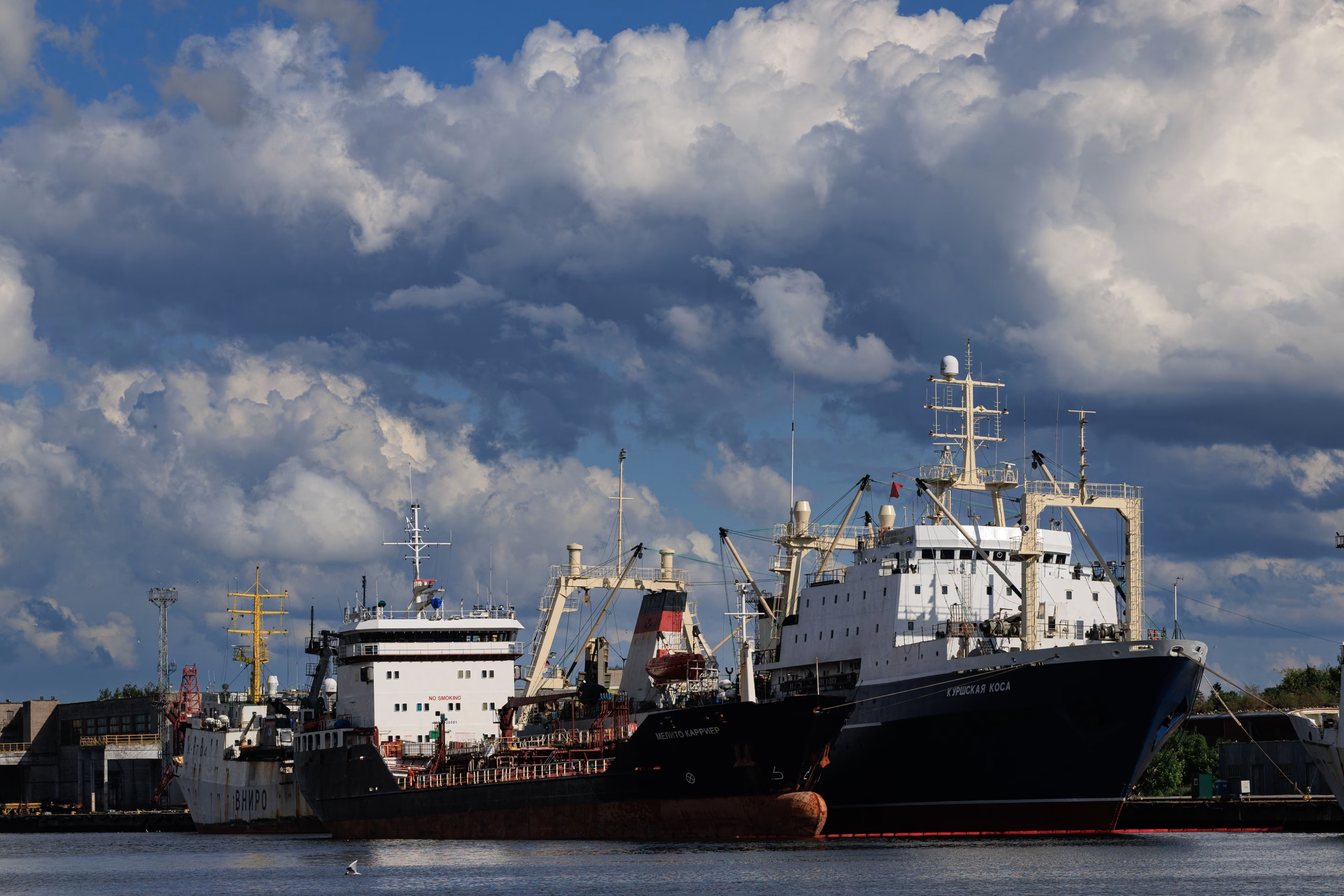
When a large commercial vessel reaches the end of its operational life, it cannot simply be treated like ordinary waste. Ships can contain thousands of tonnes of steel, machinery, electrical systems, cables, equipment, oils, insulation and other materials. Shipbreaking is the process of dismantling such vessels so that valuable materials can be recovered, recycled or disposed of appropriately.
Modern
shipbreaking can involve much more than workers cutting a vessel into pieces. At properly equipped facilities, engineering, lifting equipment, material identification, environmental controls and digital planning can all contribute to the process. The exact methods vary significantly between facilities and countries, but technological development has created opportunities to make vessel recycling more controlled and efficient.
How Shipbreaking Begins Before the Vessel Is Dismantled
An important part of shipbreaking happens before major dismantling starts. A vessel must first be assessed so that the facility understands what it is dealing with.
Information about the vessel's construction, machinery, tanks and materials can be used to develop a dismantling plan. Particular attention must be given to potentially hazardous materials.
Older vessels may contain substances and materials requiring special handling. These can include asbestos-containing materials, certain oils and chemicals, coatings containing hazardous substances and other potentially dangerous waste.
Identifying these materials in advance allows the recycling facility to plan how they should be removed, stored and managed.
Digital Planning Is Changing Modern Shipbreaking
Digital technology can make planning more systematic. Ship drawings, technical documentation and inventories can provide information about the vessel before physical work progresses through individual sections.
In advanced shipbreaking operations, digital systems can also be used for project planning and documentation.
A large ship is effectively an enormous industrial structure. Dismantling therefore involves considering the sequence in which components and sections should be removed.
Digital records can additionally help track materials after they leave the vessel. This is particularly useful when a recycling operation needs documentation showing how different waste streams have been handled.
Heavy Machinery Plays a Central Role in Shipbreaking
A ship contains extremely heavy components, meaning machinery is essential to many dismantling operations.
Cranes, excavators, material handlers, lifting equipment and transport vehicles can all be involved in shipbreaking. The exact machinery depends on the facility and the vessel being recycled.
Large components may need to be supported and lifted before they can be moved to another processing area. Mechanical equipment reduces the need to handle extremely heavy materials manually, although qualified personnel and strict procedures remain essential.
Modern lifting equipment can also provide operators with greater control when moving large sections through a recycling facility.
Cutting Technology Is Essential to the Shipbreaking Process
A significant proportion of a vessel consists of steel, and separating this structure into manageable sections is a central part of shipbreaking.
Different cutting technologies can be used depending on the material, location and facility. Thermal cutting methods are commonly associated with dismantling steel structures, while mechanical cutting equipment may also be used for suitable tasks.
The process generally moves from larger structures toward smaller, manageable pieces.
Cutting a vessel is not simply a question of working as quickly as possible. The sequence must account for the stability of the remaining structure, the weight of sections and the ability to remove them safely.
Fire prevention and control are particularly important whenever hot work is performed.
Shipbreaking Relies on Powerful Lifting and Material-Handling Systems
Once a section has been separated, it must be moved. This makes material handling another important technological element of shipbreaking.
A large steel section can weigh several tonnes, so lifting points, equipment capacity and the position of the load have to be considered carefully.
Cranes and material handlers can transfer components to designated processing areas. Smaller pieces can subsequently be sorted according to their material type.
The objective is to establish a controlled flow in which material moves from the vessel through dismantling, sorting and eventually recycling or disposal.
The equipment used must always operate within its rated capacity, as uncontrolled movement of heavy steel represents a serious hazard.
Material Identification Makes Shipbreaking More Efficient
Ships are made from much more than steel. They can contain aluminium, copper, stainless steel, electrical cables, machinery and numerous other materials.
Modern shipbreaking therefore benefits from effective material identification.
Workers may initially identify obvious components visually, while more specialised analysis can be used where the precise composition of a material matters.
Portable analytical instruments are available in industrial recycling applications to help identify metals and alloys. Separating materials accurately can improve recycling quality because different metals have different properties and values.
Rather than treating the vessel as one enormous mass of scrap, the facility can divide it into individual material streams.
Environmental Control Technology Is Important in Shipbreaking
One of the major challenges surrounding shipbreaking is preventing hazardous substances from contaminating the surrounding environment.
Facilities can use impermeable working surfaces, drainage systems, collection equipment and designated waste-storage areas to control pollutants.
Before dismantling certain sections, remaining liquids may also need to be removed from tanks, pipes and machinery. Oil, fuel residues and contaminated water require appropriate handling rather than uncontrolled release.
Environmental technology is therefore closely connected with the physical dismantling process.
The quality of environmental protection varies between facilities, which is one reason the conditions under which vessels are recycled matter significantly.
Hazardous Materials Require Special Procedures During Shipbreaking
Some of the most technically demanding parts of shipbreaking concern materials that cannot be handled like ordinary scrap.
Asbestos is a well-known example in older vessels. Depending on the ship, other hazardous substances may also be present in paints, insulation, electrical components or operational systems.
Such materials require identification and appropriate removal procedures.
Protective equipment, controlled working areas, suitable containment and specialised waste management may be necessary depending on the hazard.
Technology can support this process, but it does not eliminate the need for trained workers and proper occupational safety procedures.
Automation Could Play a Growing Role in Shipbreaking
Automation is already changing many industrial sectors, and some technologies have potential applications in shipbreaking as well.
Remote-controlled equipment can potentially allow certain operations to be conducted with workers farther away from hazardous areas. Robotic systems and advanced cutting technologies may also become increasingly relevant for specific repetitive or dangerous tasks.
However, dismantling a ship is difficult to automate completely.
Vessels vary considerably in age, construction and condition. Unlike a modern factory producing identical objects repeatedly, shipbreaking often involves dealing with a unique structure whose condition may have changed over decades.
Human assessment is therefore still extremely important.
Shipbreaking Can Recover Large Quantities of Valuable Steel
One of the main economic reasons for dismantling ships is the enormous amount of reusable material contained within them.
Steel recovered through shipbreaking can enter established scrap-processing and metal-recycling systems.
After being separated and prepared, scrap steel can ultimately become raw material for new steel production. Other metals, including copper and aluminium, may also be recovered separately.
Some equipment can potentially be reused rather than immediately recycled, depending on its condition, applicable requirements and market demand.
This means that an end-of-life ship can become a substantial source of secondary raw materials.
Data Can Improve Traceability Throughout Shipbreaking
Documentation is becoming increasingly important throughout industrial supply chains, and shipbreaking is no exception.
Digital systems can potentially record what materials have been removed, their quantities and where they have been sent.
This creates greater traceability between dismantling and downstream waste or recycling operations.
Data can also be useful for operational purposes. A facility can record how much material is recovered from different vessels, how long individual stages take and where delays occur.
Over time, these records can support better planning for future projects.
Worker Safety Remains Critical Despite Better Shipbreaking Technology
Advanced equipment does not automatically make shipbreaking safe.
Workers can face risks involving heavy objects, working at height, confined spaces, hazardous substances, fire, fumes and moving machinery. Consequently, technology needs to be combined with training, risk assessment and suitable procedures.
Gas detection equipment, ventilation, fall protection, personal protective equipment and communication systems can all contribute to safer operations when used correctly.
Before workers enter enclosed spaces, particular precautions may be required because dangerous atmospheres can exist without being visible.
Technology is therefore most effective when it forms part of a broader safety system rather than being considered a replacement for good working practices.
The Future of Shipbreaking Could Become More Technology-Driven
The future of shipbreaking is likely to involve greater use of digital planning, material tracking, advanced machinery and environmental monitoring. Automation and remote operation may also become more useful for tasks where keeping people farther from hazardous operations provides an advantage.
At the same time, the fundamental objective will remain relatively simple: take an extremely large and complicated vessel and separate it into manageable components and material streams.
What makes the process challenging is the scale and complexity of a ship. Every vessel contains numerous interconnected systems, materials and structures that must be handled in an appropriate sequence.
Modern shipbreaking therefore sits at the intersection of heavy industry, engineering, recycling and waste management. Cranes and cutting equipment handle the physical structure, analytical technology helps identify materials, environmental systems control potential pollution, and digital tools can improve planning and traceability.
When these technologies are combined with trained personnel and appropriate safety and environmental practices, shipbreaking can transform an end-of-life vessel from a massive industrial structure into materials that can potentially be reused or recycled. As technology continues to develop, the process has the potential to become increasingly controlled, traceable and efficient while reducing some of the risks traditionally associated with dismantling large ships.